
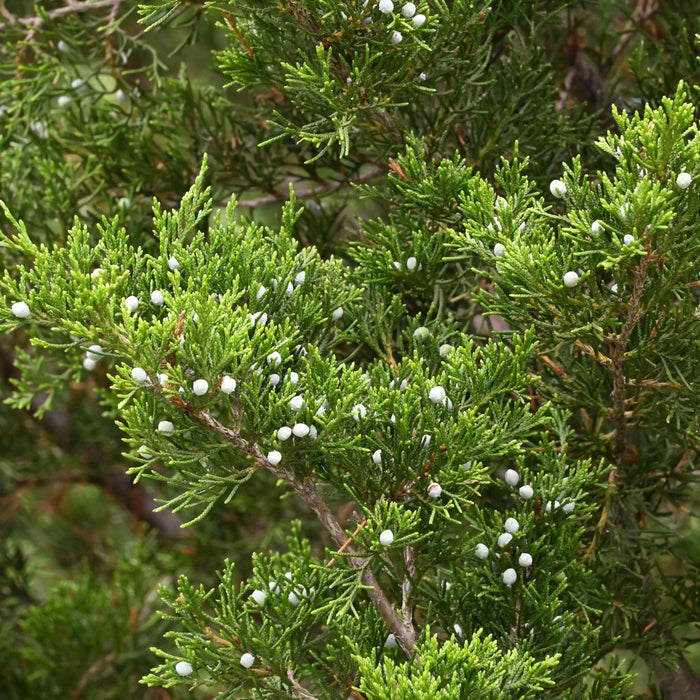


Eastern Red Cedar (Juniperus virginiana) 3 GAL
Fall Species
This Species is typically available during our Fall Sale Preorders in August, and/or the in-person Fall Sale Mid-September through Mid-October at Geist Nursery in Fishers, IN.
One of Indiana’s few evergreens, and a favorite food of cedar waxwings! Young trees are bush like and pyramidal, while adult trees are branching an have a prehistoric feel. Prefers poor, dry soils where competition is minimal, and is drought tolerant. Useful as an evergreen visual barrier!
Pollination: Male and female needed.
Light: Full Sun, Part Sun/Shade
Soil Moisture: Mesic, Dry Mesic, Dry
Soil Type: Sandy, Rocky, Sandy Clay, Rocky Clay
Height: 30’-90’
Width: 8’-30’
Bloom Color: -
Bloom Time: -
Fruit: Female trees bear small, light blue/gray cones that resemble berries.
Fall Color: (Evergreen)
Root Type: Branching
Notable Wildlife Interactions: Hosts the olive hairstreak butterfly, moths such as the juniper geometer, beetles, leafhoppers, plant bugs, and some smaller insects. Cones are eaten by many birds including cedar waxwings, thrushes, and eastern bluebirds. Evergreen foliage provides valuable nesting habitat for birds such as Cooper’s hawks, blue jays, multiple warblers, house finches, and multiple sparrows. Trees also provide valuable rooting sites. Occasionally browsed by deer.
Notes: Trees are a colonizer species that have difficulty with competition. Can live up too 300 years, but are often crowded out before then.
Shipping Unavailable