
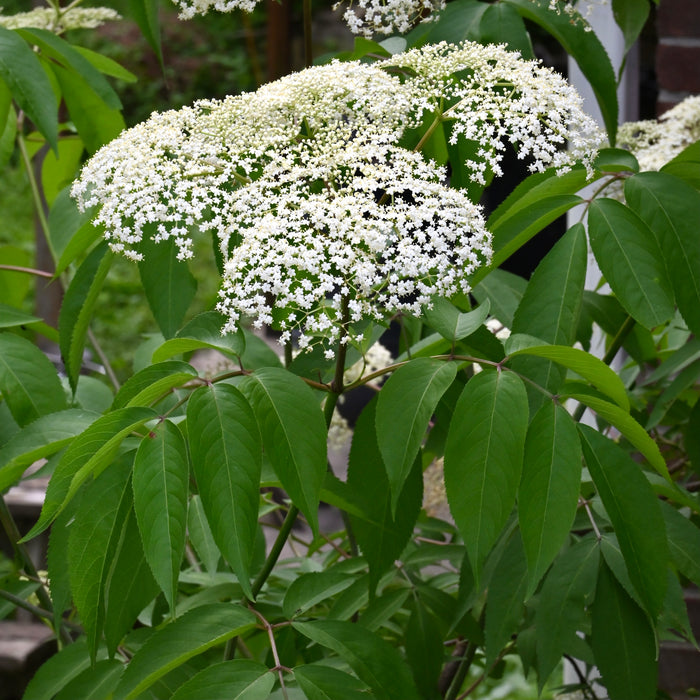


American Elderberry (Sambucus canadensis) 1 GAL
Fall Species
This Species is typically available during our Fall Sale Preorders in August, and/or the in-person Fall Sale Mid-September through Mid-October at Geist Nursery in Fishers, IN.
A.k.a common elderberry and black elder. A well known, fast growing native shrub with lightly lemon scented flowers and fruit highly desirable to wildlife, particularly songbirds. An adaptable addition to a native edible garden, flower, or pollinator garden. A native alternative to various wildly invasive honeysuckle bushes: elderberry has a similar growth habit and requirements, so is a shoe-in colonizer to fill space left by invasive plant removals. This is a fast growing plant, and can be cut back to the ground every few years to maintain a dense form.
Pollination: 2+ individuals reccomended.
Light: Full Sun, Part Sun/Shade
Soil Moisture: Wet, Wet Mesic, Mesic
Soil Type: Adaptable
Height: 4’-12’
Width: 4’-12’
Bloom Color: White
Bloom Time: May-Jun
Fruit: Purple/black berries mature Aug-Sep.
Fall Color: Yellow
Root Type: Rhizome
Notable Wildlife Interactions: Flowers attract bees, flies, and beetles. Hosts a few species of moths, beetles, borers, and some smaller insects. Hollow stems provide nesting cavities for some masonry and carpenter bees. Berries are highly sought after by a wide variety of fruit eating birds including thrushes, thrashers, bluebirds, and waxwings. Foliage is bitter and rarely browsed by mammals.
Notes: Fruits are not edible raw. Resistant to heat, drought, and soil compaction. Stems have historically been made into whistles and maple sugaring spiles, stems and fruit could be made into dyes.
Shipping Unavailable